kdp · logic grid books
Logic grid puzzle books for KDP, ready to upload
Each puzzle is a short story, a list of numbered clues and a grid to mark with crosses and dots, the kind of deduction puzzle people know from puzzle magazines. Pick the level, the number of puzzles and the trim size. You get the interior PDF with every answer, the full wrap cover with the spine sized to the page count, and a signed check of both files against KDP’s paperback specs. One price for any logic grid book: 500 credits, from $3.30 in the big pack.
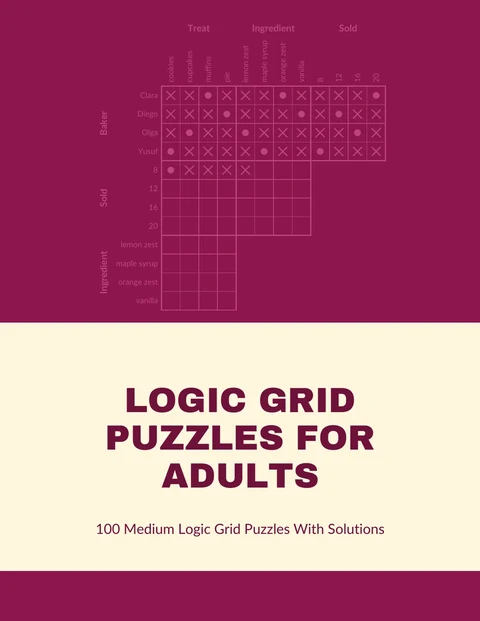
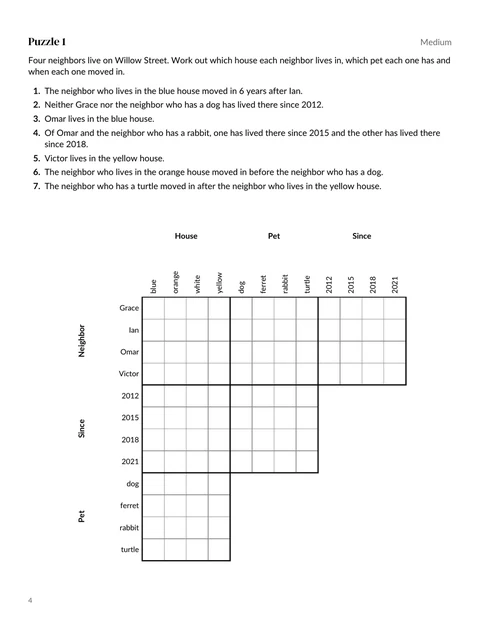
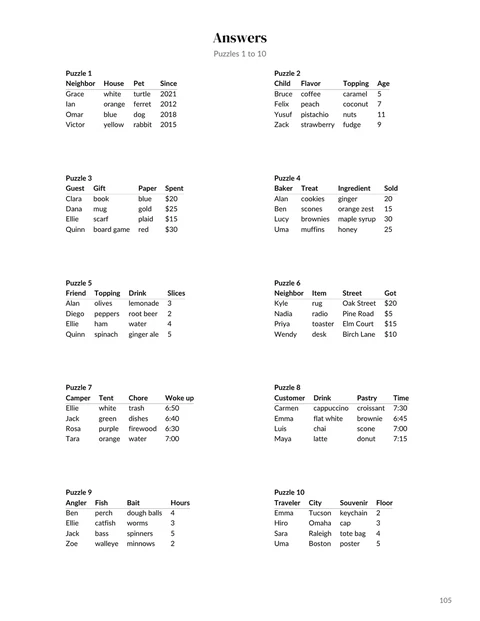
The sample book, as delivered
How every logic grid puzzle is checked
- Exactly one answer. A separate search, apart from the steps that make the puzzles, places the people’s things one kind at a time, tests every clue as soon as it can, and finds exactly one way to match everyone with everything: the one printed in the answers.
- Logic alone, no guessing. Each puzzle is solved again step by step, the way a solver works the grid: a cross where a clue rules a match out, a dot where it fixes one, a dot crossing out the rest of its row and column, two matched things sharing what they rule out. Medium and hard puzzles add clues that compare numbers (paid more, read 3 more books) and clues that pair two people with two things. Every medium and hard puzzle needs more than the easy steps; one the easy steps can finish is never printed.
- No spare clues. While a puzzle is made, every clue the solving steps can do without is taken out, so each printed clue moves the solve on.
- Clues that read like sentences. “Of Ann and the friend who paid $20, one named the pet Ziggy and the other named the pet Maple.” Every printed line is written again from its clue and compared before the book is made.
- Full answers at the back, one small table a puzzle: each person and what goes with them.
What you choose
| Level | Easy (four people and two other kinds of things), medium (four people and three, at least one clue comparing numbers) or hard (five people and three, at least two comparisons) |
|---|---|
| Stories | 31 settings, from a bake sale to a robot contest, each puzzle with its own names, things and clues; a book uses every setting once before any comes back |
| Puzzles | 9 to 100 on 8.5 × 11 in large print, 18 to 100 in regular print; the form shows the range for each size and level |
| Large print | On by default: a spread a puzzle, the story and clues at 16 pt on the left-hand page and the grid on the facing page, names and labels at 16 pt. Easy on 7 × 10 in and larger, medium and hard on 8 × 10 in and larger |
| Regular print | One page a puzzle, the clues at 11 pt above the grid; the grid is as big as the book’s most crowded page allows and the same size on every page. Hard on 7 × 10 in and larger |
| Trim size | 6 × 9, 7 × 10, 8 × 10, 8.5 × 11 in or A4; white, cream or groundwood paper |
| Title and author | Your title, subtitle and name or imprint, printed on the cover, the spine and the title page |
| Cover color | The kind’s own color, or one of thirteen others, so a series of yours looks like no one else’s |
| Cover layout | The grid above the title, the title above the grid, or the title on a card under the grid |
| Seed | The same seed and settings make exactly the same book again; left empty, every book is new |
Questions
What is a logic grid puzzle?
A short story about a few people, each of whom has one thing of each kind: a pet, a house color, a prize. No two people share a thing. The clues say who does or does not go with what, and the grid has a small square for every pair of things: you put a cross where a pair cannot match and a dot where it must, until every person is matched with everything. Some people know them as zebra puzzles. The book’s how-to page explains the rules, this one too: two people named in one clue are always two different people. In regular print it also shows a small example solved.
Will KDP accept the files?
Each book passes our check against KDP’s published paperback specs before you can download it: page size, page count, embedded fonts, margins and gutter for the page count, line weight, blank pages, cover size and spine. If KDP still rejects the files within 30 days, the book’s 500 credits go back to your key.
Who wrote the stories?
The settings, their lists of names and things and the sentence patterns of the clues were drafted with an AI writing tool when the program was written; which clues a puzzle gets is chosen by the program, which checks that they lead to exactly one answer. listing.txt says this in the words KDP’s AI question needs, so you can answer it.
Can I make a series?
Yes. One book per level with your series name in the title, or the same level with new puzzles in each volume: every book without a seed gets new puzzles. Pick a cover color and layout for the series on the form, so its covers stand apart from other people’s.
Can logic grids go in a variety book?
Yes. Pick them with any of the other kinds on the form; they get their own page of rules and their own answers section, and in large print each one still opens as a spread.
What goes in the listing?
listing.txt in the ZIP has a title, subtitle, description, seven keyword ideas and the print options to pick on KDP. The preview folder has six images of real pages for your listing.
Also: sudoku books · skyscrapers books · nonogram books · futoshiki books · cryptogram books · variety books · large print puzzle books · KDP cover sizes