kdp · futoshiki books
Futoshiki books for KDP, ready to upload
Pick the level, the number of puzzles and the trim size. You get the interior PDF with every solution, the full wrap cover with the spine sized to the page count, and a signed check of both files against KDP’s paperback specs. One price for any futoshiki book: 500 credits, from $3.30 in the big pack.
The sample book, as delivered
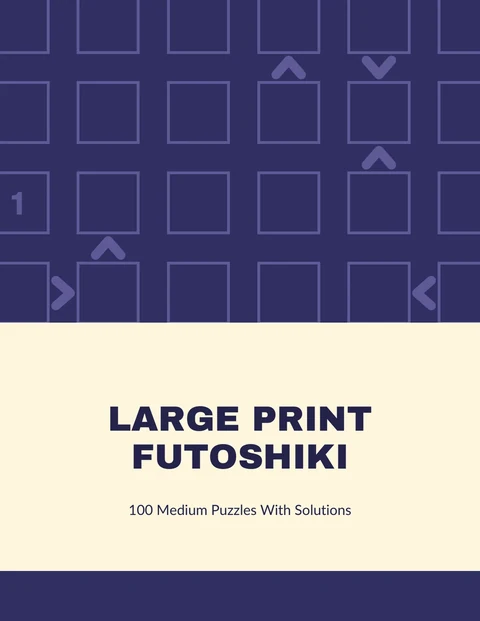
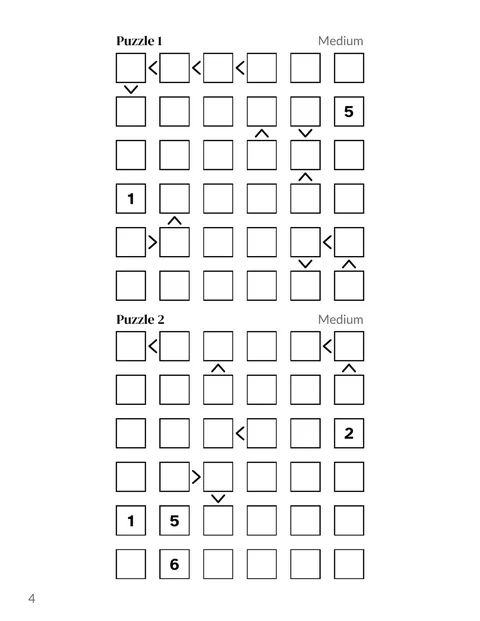
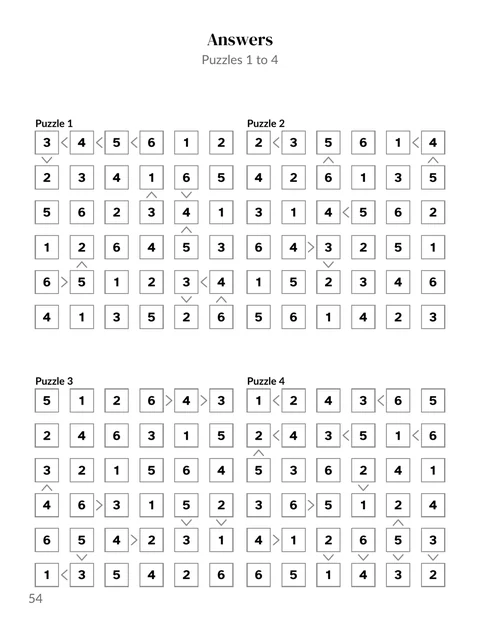
How every futoshiki is checked
- Exactly one solution. A separate search, apart from the steps that make the puzzles, tries every way to fill the grid that keeps every sign and every starting digit, and finds exactly one finished grid: the one printed in the answers.
- Logic alone, no guessing. Each puzzle is solved again step by step from its signs and starting digits, after it is made and again before it is printed. Easy puzzles need only what each sign allows, the digits already placed in a row or column, and the digits that have one place left. Medium ones may also use pairs: two squares of a row or column that share the same two digits. Every hard one needs more than the basics, such as pairs, triples or two digits with only two places in a line. A hard puzzle the basic steps can finish is never printed.
- The signs carry it. Signs sit only between squares side by side or one above the other, and every sign holds in the solution. A grid starts with at most 6 digits (7 at medium) and has at least 4 signs (6 at medium, 12 at hard), so the puzzle is in the signs, not the starting digits.
- Full solutions at the back, with the signs drawn in grey so a solver can check each one at a glance.
What you choose
| Level | Easy (5 × 5 grids), medium (6 × 6) or hard (7 × 7, every puzzle needs more than the basic steps) |
|---|---|
| Puzzles | 25 to 200 on 8.5 × 11 in large print; the form shows the range for each size and level |
| Large print | On by default: two puzzles to a page 8 in wide or more, one on smaller trims, starting digits of 16 pt or more. Regular print puts four on a page 8 in wide or more, two on smaller ones |
| Trim size | 6 × 9, 7 × 10, 8 × 10, 8.5 × 11 in or A4; white, cream or groundwood paper |
| Title and author | Your title, subtitle and name or imprint, printed on the cover, the spine and the title page |
| Cover color | The kind’s own color, or one of ten others, so a series of yours looks like no one else’s |
| Cover layout | The puzzle above the title, the title above the puzzle, or the title on a card over the puzzle |
| Seed | The same seed and settings make exactly the same book again; left empty, every book is new |
Questions
What is futoshiki?
A number grid with signs between some of its squares. Every row and column holds the digits 1 to 5 once (1 to 6 at medium, 1 to 7 at hard). A sign between two squares works like < and >: its point always faces the smaller digit, across a row or up and down a column. Most grids also start with a few digits in place. The book’s how-to page explains the rules.
Will KDP accept the files?
Each book passes our check against KDP’s published paperback specs before you can download it: page size, page count, embedded fonts, margins and gutter for the page count, line weight, blank pages, cover size and spine. If KDP still rejects the files within 30 days, the book’s 500 credits go back to your key.
Can I make a series?
Yes. One book per level with your series name in the title, or the same level with new puzzles in each volume: every book without a seed gets new puzzles. Pick a cover color and layout for the series on the form, so its covers stand apart from other people’s.
Can futoshiki go in a variety book?
Yes. Pick it with any of the other kinds on the form; it gets its own page of rules and its own answers section.
What goes in the listing?
listing.txt in the ZIP has a title, subtitle, description, seven keyword ideas and the print options to pick on KDP. The preview folder has six images of real pages for your listing.
Also: sudoku books · killer sudoku books · calcudoku books · kakuro books · variety books · large print puzzle books · KDP cover sizes